DECEMBER 2025
Advancing the American AI Stack
A Policy Blueprint for Trusted, Efficient, and Competitive U.S. Inference Infrastructure
Introduction
Introduction
Introduction
Power has always flowed from the control of the world's essential resources. Once it was steel, then oil, then data. Today, it is AI compute, and specifically, the ability to run AI systems efficiently at global scale. Whoever controls AI compute will shape the century ahead.
Compute is fast becoming the foundation of global economic growth. In the United States, investment in AI infrastructure—from data centers to semiconductors and energy systems—is already moving the needle: J.P. Morgan estimates that data-center spending alone could boost U.S. GDP by up to 20 basis points over the next two years. According to The Economist, investments tied to AI now account for 40 percent of America's GDP growth over the past year, equal to the amount contributed by consumer spending growth. That statistic would be staggering regardless of how long AI has been part of the economy, but this is just the start.
American AI Stack
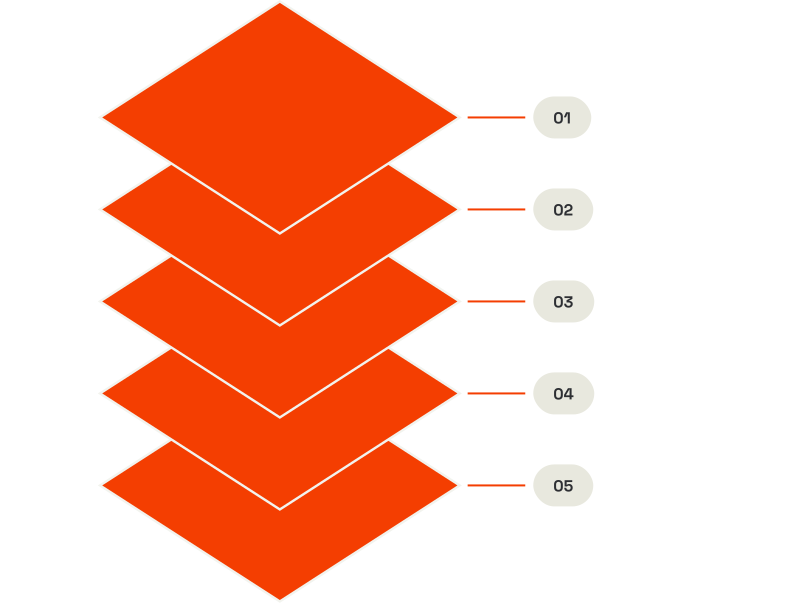
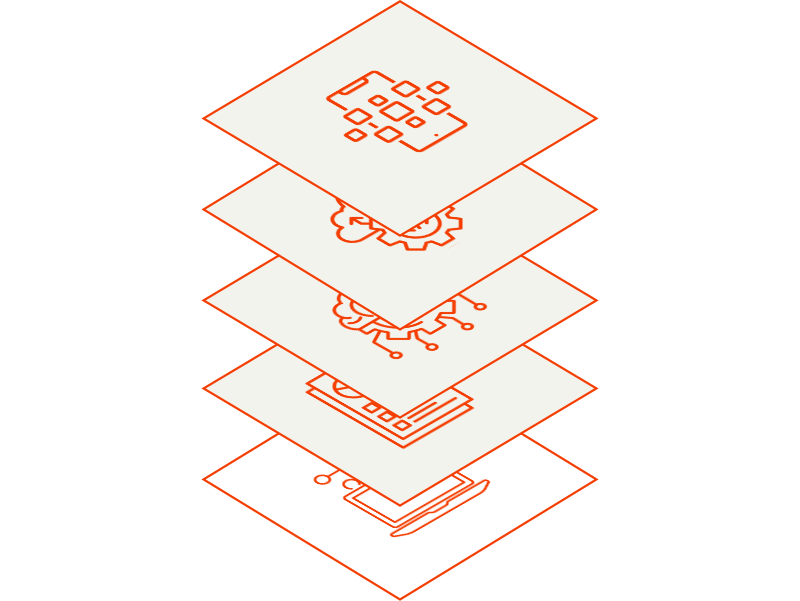
Every technology has a stack, the building blocks that make it work. AI is no different.
American AI Stack
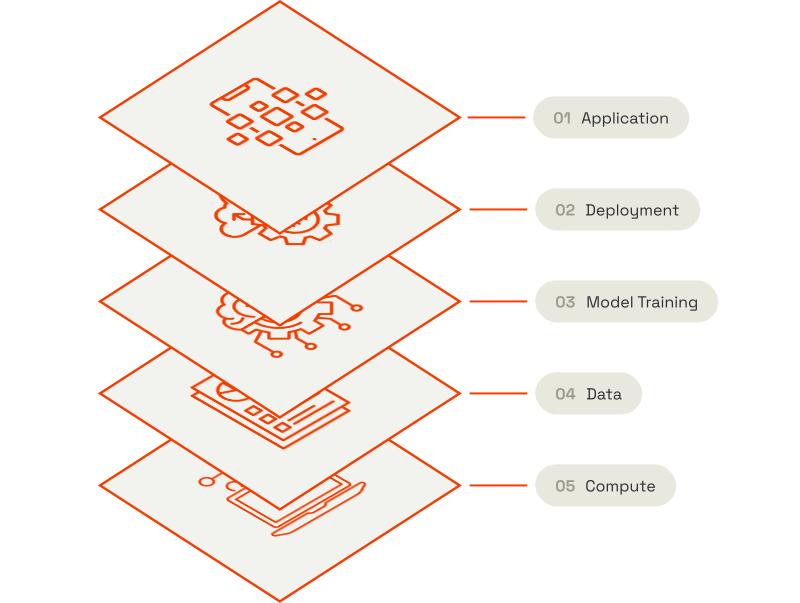
The AI stack is how we build and scale artificial intelligence.
American AI Stack
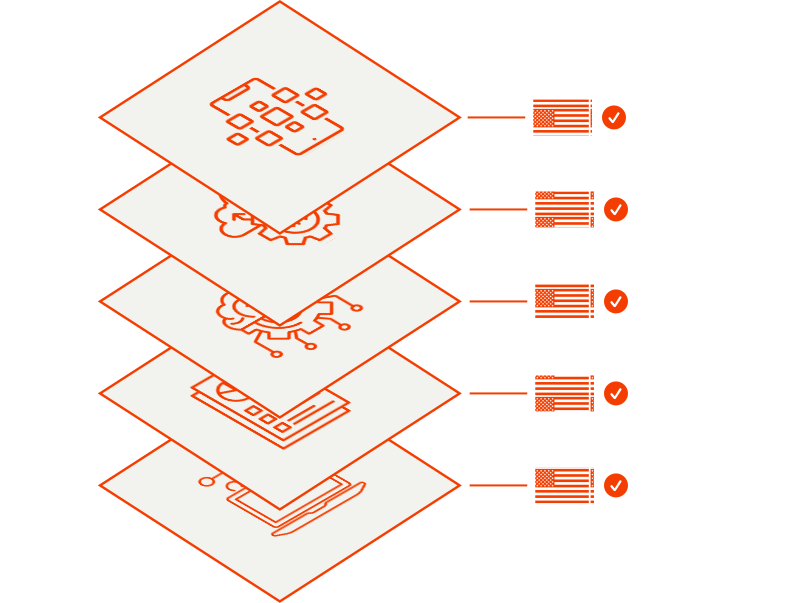
America leads at every layer, from chips to applications. That leadership is essential to global adoption of safe and trusted AI technology.
American AI Stack
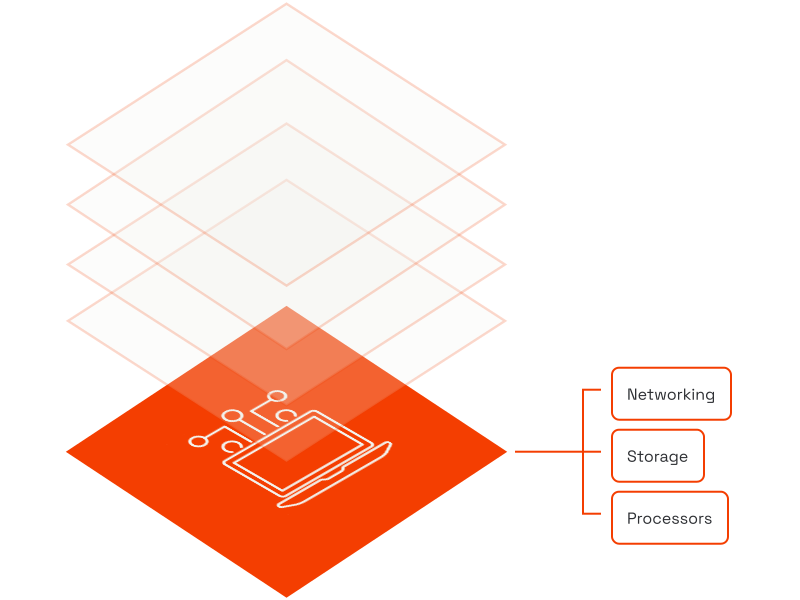
01. Compute
The hardware and cloud systems that power AI.
List is not exhaustive (sorted alphabetically)
American AI Stack
02. Data
The information AI learns from, cleaned and organized.
List is not exhaustive (sorted alphabetically)
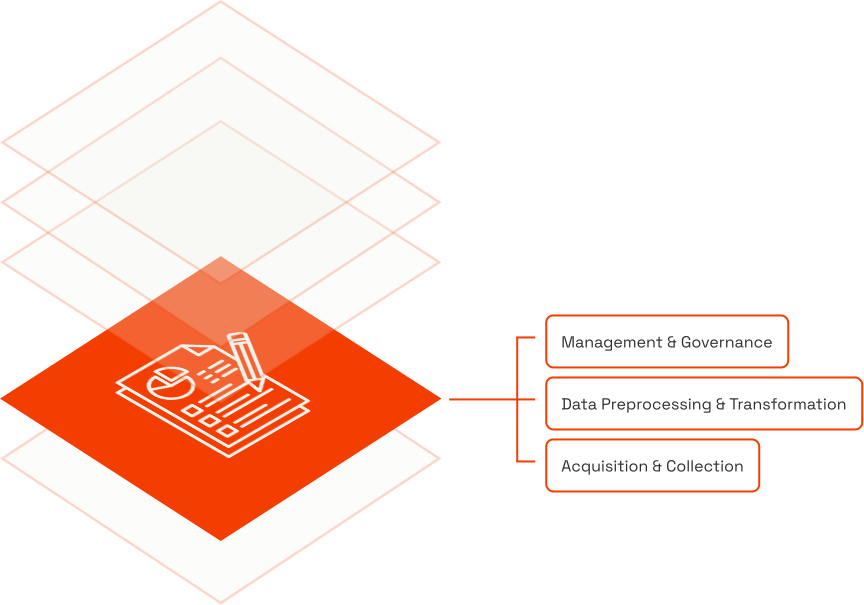
American AI Stack
03. Model Training
Where algorithms are built, trained, and tested to recognize patterns and make predictions.
List is not exhaustive (sorted alphabetically)
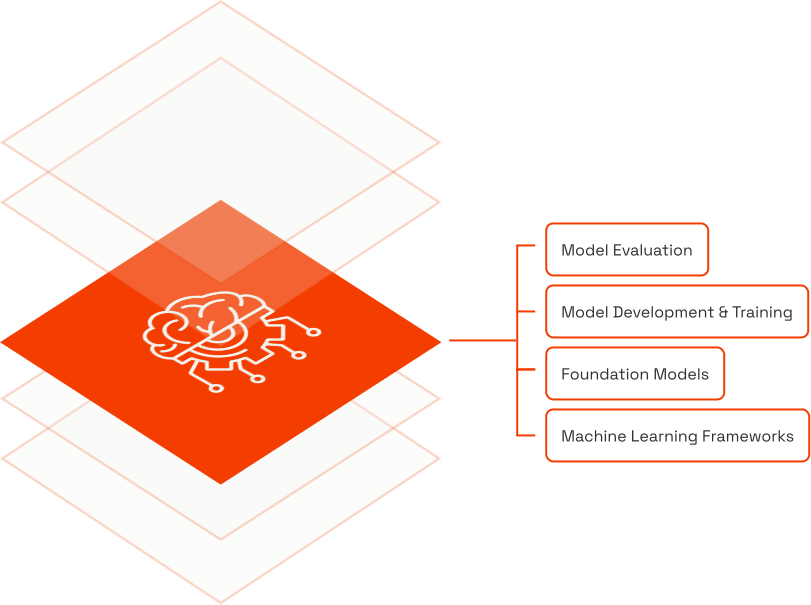
American AI Stack
04. Deployment
The tools that put models to real-world use.
List is not exhaustive (sorted alphabetically)
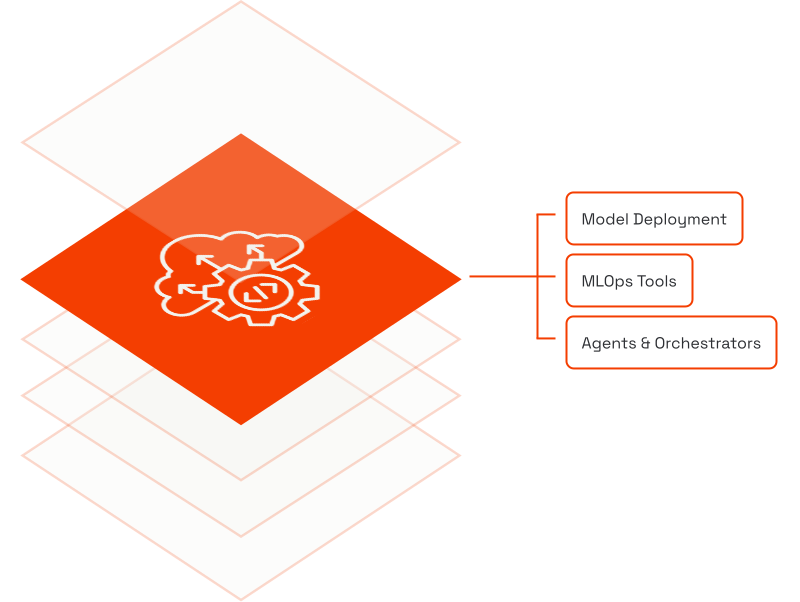
American AI Stack
05. Application
The apps and services where people interact with AI.
List is not exhaustive (sorted alphabetically)
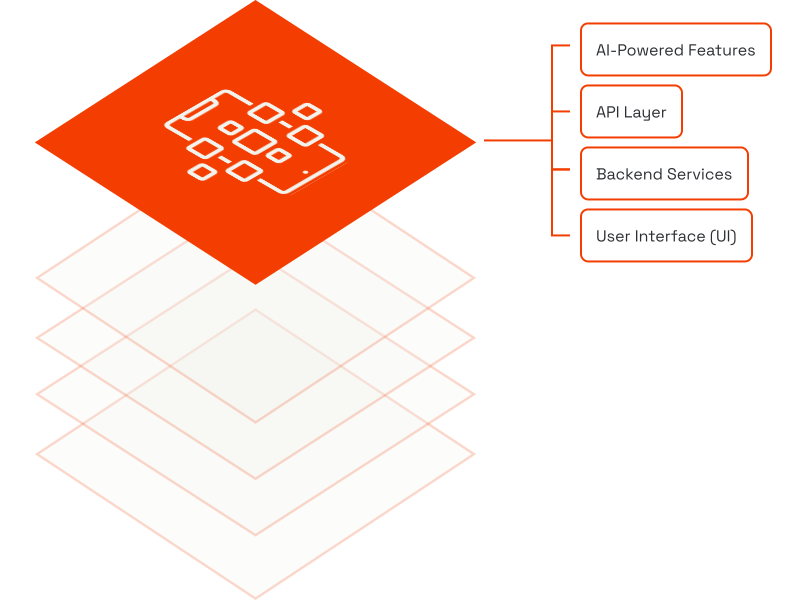
American AI Stack
The American AI stack is how we ensure that we remain at the forefront of AI advancement.
Test
Test
Test
In real-world scenarios, how the compute systems and data architecture within the stack function and interact will be contingent on the stack’s overall structure and the opportunities it addresses. For example, each application may require a different selection and configuration of models, hardware, and deployment solutions. As such, the stack will remain a dynamic organism, its components interchangeable and working in concert, rather than a disjointed set of layers. Given the fundamental impact of this dynamism, an export program organized around rigid layer boundaries could inadvertently slow the cross-layer innovation that gives U.S. technology its competitive advantage over more centralized, state-directed competitors.